THINK BETTER: THE SIX THINKING HATS POWERED BY LEGO® SERIOUS PLAY®
Have you ever been there, as a manager, when you had to make an important decision even though the information wasn’t complete, your team wasn’t fully ready, and deep down you still wondered, “What if I make the wrong call?”
Whether it’s approving a new plan, choosing the right person for the team, or having a difficult conversation with an employee — decision-making often feels like one of the heaviest responsibilities a leader carries.
The Challenges of Decision-Making for Managers
Many managers know they need to make a choice — yet somehow, it feels impossible to choose. Because in reality, decision-making isn’t just about logic. It’s also about feelings, fear, and pressure that quietly shape every option on the table.
Meetings that were meant to find solutions often turn into endless debates.
Some people talk too much, some stay silent, while others hold great ideas but don’t dare to speak up.
In the end, we often choose to delay the decision — not because we don’t care, but because we don’t want to be wrong. Yet in the real world, not deciding can sometimes mean losing the opportunity altogether.
Why Decision-Making Feels So Difficult
Because our thinking is complex — and often filled with invisible biases we’re not even aware of. Sometimes we decide too quickly, confident that our experience alone is enough. Other times, we hesitate — wanting to consider every angle, but not knowing where to start.
And that’s exactly where the Six Thinking Hats comes in.
Six Thinking Hats — Decision Making in a Structured Way
Edward de Bono introduced the concept of Six Thinking Hats to help people look at challenges from multiple perspectives.
Each “hat” represents a distinct mode of thinking — encouraging us to separate our thoughts instead of mixing logic, emotion, creativity, and caution all at once.
When we consciously “wear” one hat at a time, we create space to explore every side of the issue — systematically, clearly, and without judgment.
Using the six hats helps us separate different types of thinking instead of letting them clash. It means we don’t have to let logic fight with emotion, or rush to a conclusion too soon. Instead, everyone on the team can think better together — in a clear and structured way.
How Does LEGO® SERIOUS PLAY® Fit In?
One of the biggest challenges in decision-making meetings is this —
a few voices dominate the room, while many others stay silent.
LEGO® SERIOUS PLAY® (LSP) creates a space where every voice matters.
Instead of just talking, participants are invited to think with their hands — building models that represent their thoughts and perspectives.
For example, they might be asked to build a model that represents “obstacles to effective decision-making.”
Once everyone builds and shares, ideas that were once invisible become visible.
Thoughts that were hidden inside start to take shape — allowing the team to see, understand, and communicate with each other more openly.
It’s not about playing with LEGO. It’s about playing with PURPOSE.
It’s about thinking with your hands and communicating with your eyes.
Hands connect to deeper parts of the brain — the ones that often “know more than we realize.” And when we learn to listen with our eyes, we begin to notice what others really mean — the unspoken insights and the hidden factors that can determine success.
When Six Thinking Hats Meets LEGO® SERIOUS PLAY®
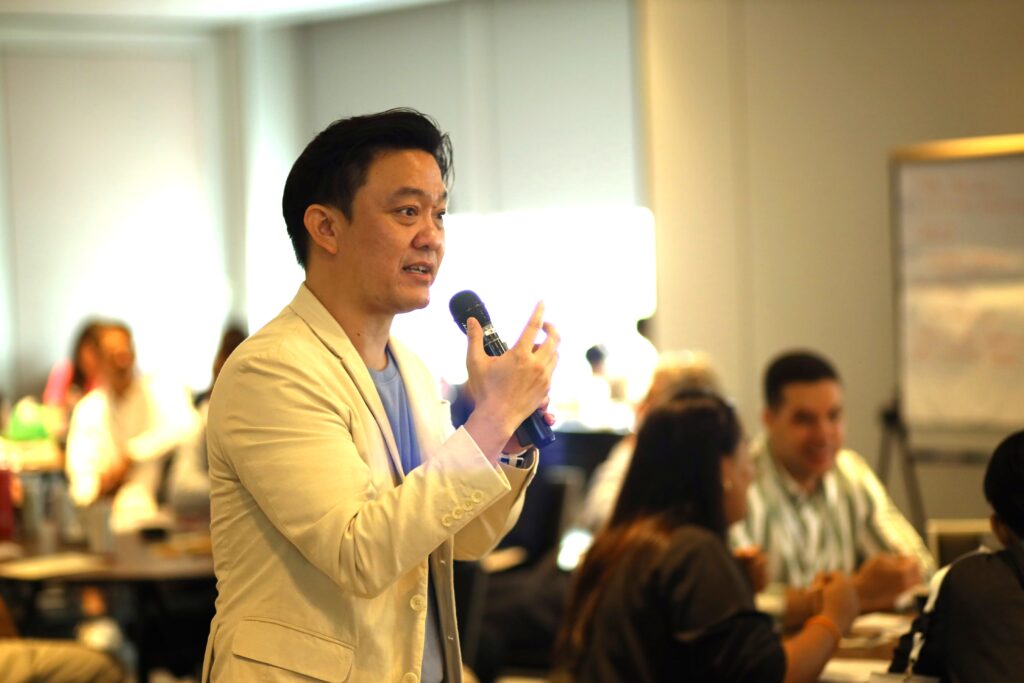
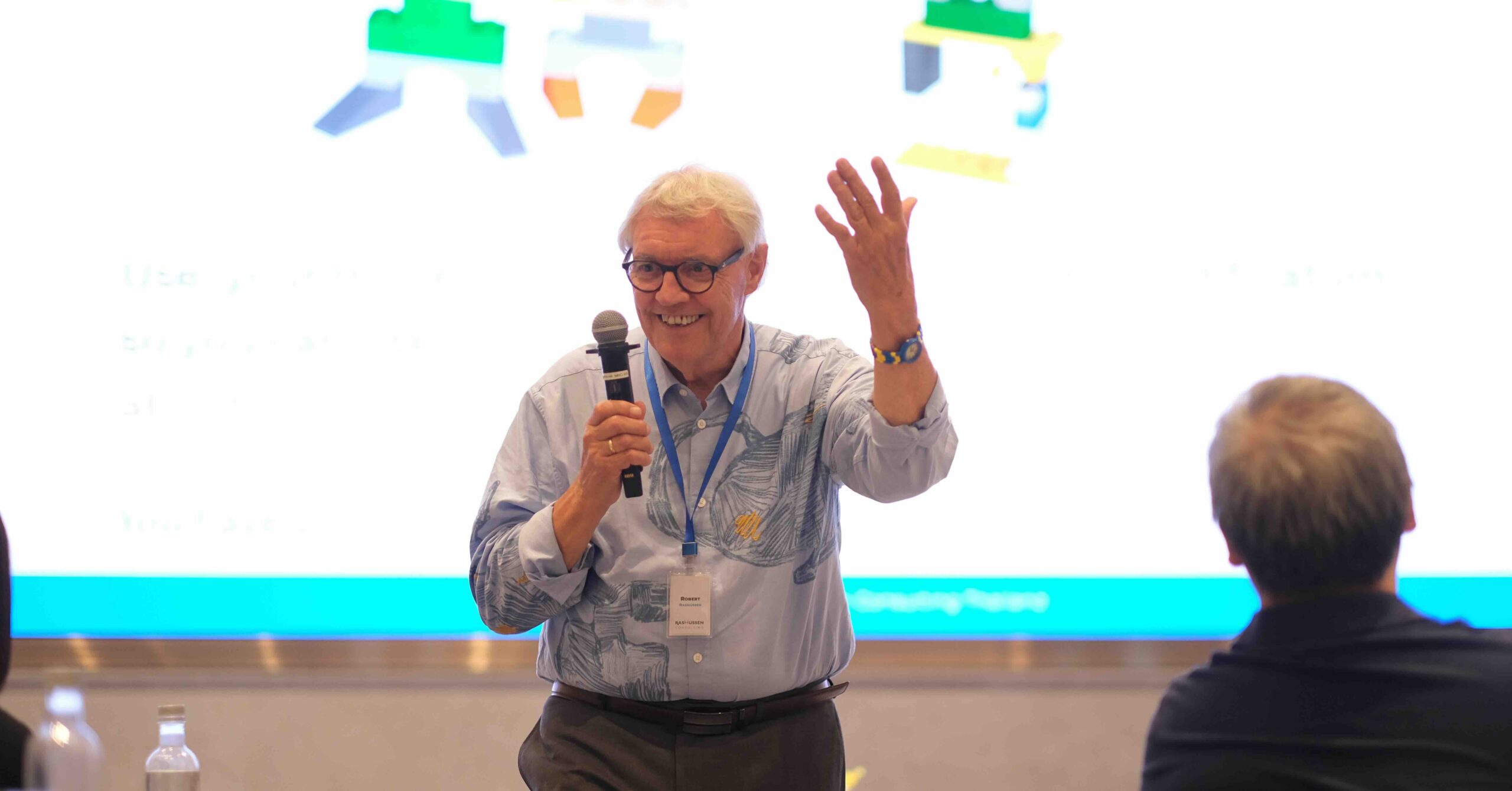
At Rasmussen Consulting Thailand, we combine the Six Thinking Hats approach with the hands-on process of LEGO® SERIOUS PLAY® to create a space for collaborative thinking — one that is both engaging and deeply powerful.
In these Learning Lab workshops, participants:
- Learn and practice using all six thinking hats through real workplace scenarios.
- Build LEGO models to represent different perspectives — from logic and emotion to risk and creativity.
- Share stories through their models, connecting ideas and insights in ways that conversations alone often can’t achieve.
- Conclude with a shared direction — reaching clarity, alignment, and true consensus as a team.
The outcome isn’t just a new way of thinking — it’s the beginning of a thinking culture that stays with your team long after the workshop ends.
Why Your Organization Should Run This Workshop
- Strengthen your team’s thinking skills.
- Build the confidence to make clear and timely decisions.
- Turn meetings from debates into collaborative problem-solving.
- Create a learning experience that is both engaging and highly participative.
Who This Workshop Is For
- Supervisors and Managers who make important decisions every day.
- HR or Learning & Development professionals who want to enhance Critical Thinking and Decision-Makingcapabilities within their teams.
- Leadership teams or cross-functional groups that need to align perspectives and reach shared conclusions together.
Facilitated by Rasmussen Consulting Thailand
Rasmussen Consulting Thailand is the official representative office of Rasmussen Consulting — the global team behind the original LEGO® SERIOUS PLAY® Method.
We bring world-class thinking to life in a way that fits the Thai organizational culture — ensuring that learning is not only understood but truly experienced.