What Is LEGO® SERIOUS PLAY®? From Its Origins to a Method for Creative Thinking and Business Strategy [EP.2]
Let’s continue exploring the interview in Episode 2.
When people think of LEGO, they often imagine a toy that helps children develop their imagination and creativity. But when they hear that LEGO bricks can also be used in meetings, team development, and even business strategy, many find it hard to believe. After all, isn’t LEGO just a toy for kids?
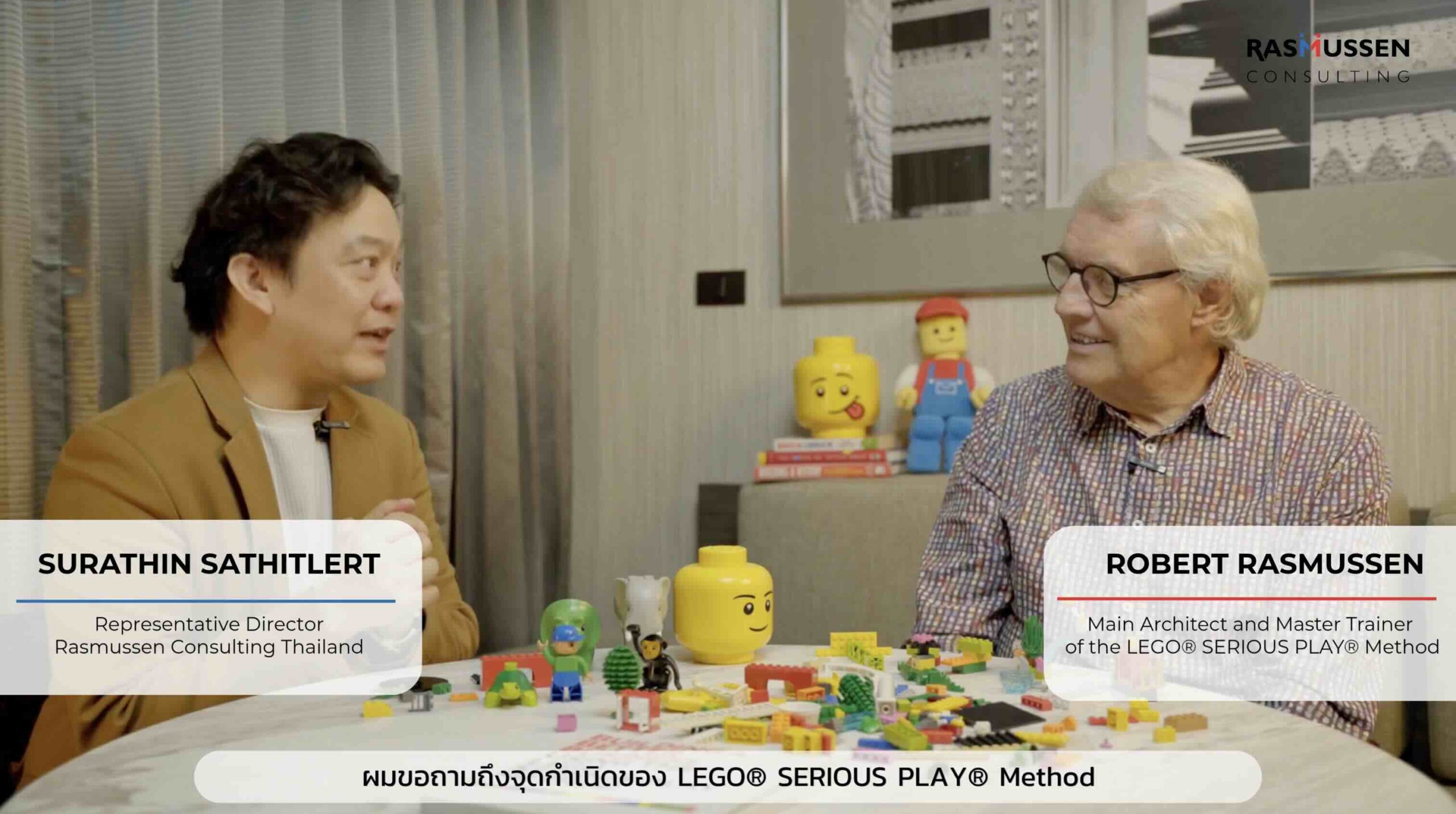
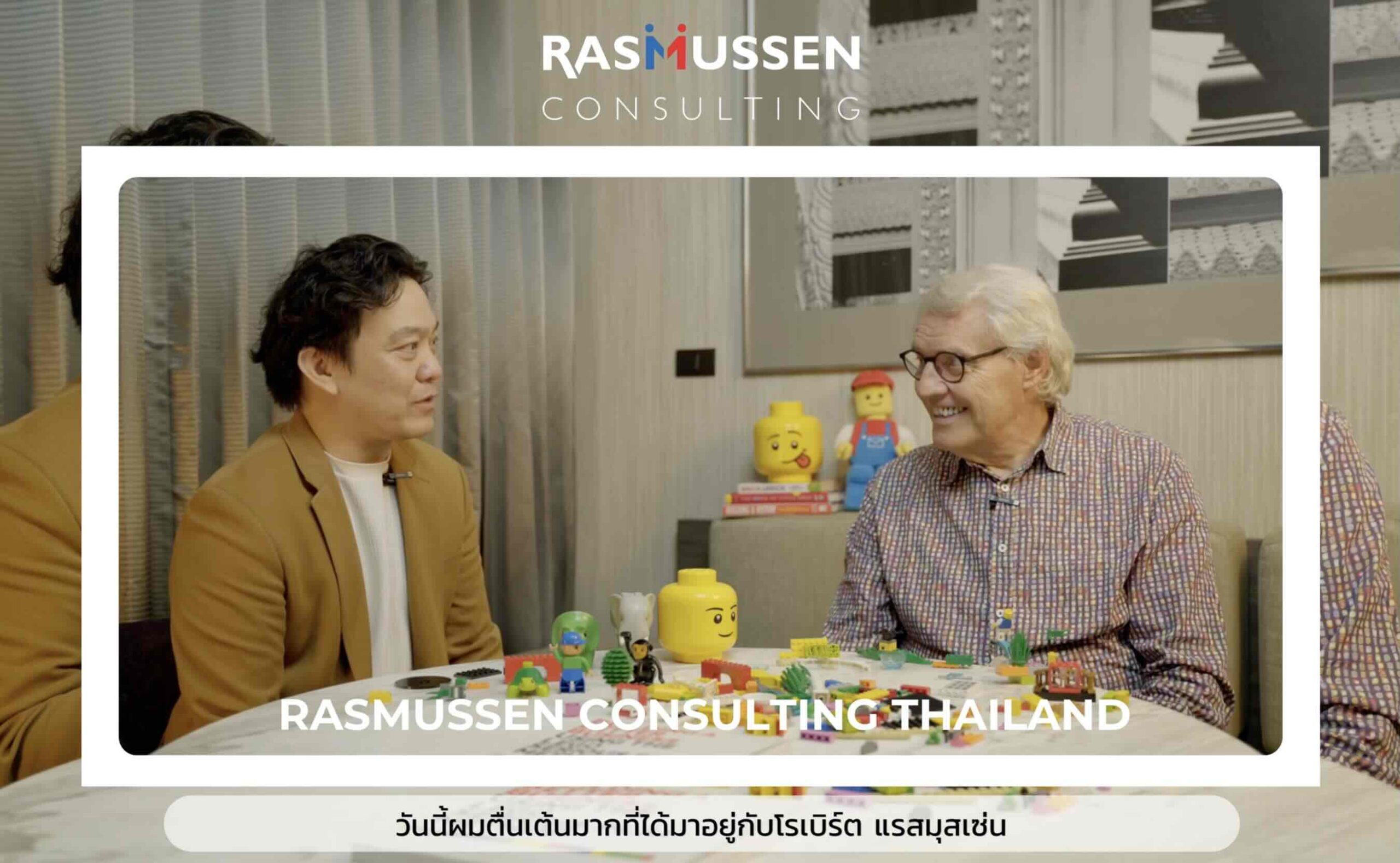
In Episode 2 of our interview series by Rasmussen Consulting Thailand, we speak with Robert Rasmussen, one of the main architects of the LEGO® SERIOUS PLAY® Method, about the origins of this approach, the meaning behind the term “Serious Play,” and why playing can help us navigate serious challenges in the business world.
Interviewer: Surathin Sathitlert (Joe) | Representative Director, Rasmussen Consulting Thailand & Facilitator
Interviewee: Robert Rasmussen | Main Architect of the LEGO® SERIOUS PLAY® Method & Master Trainer
What Is LEGO® SERIOUS PLAY®?
Robert Rasmussen explains that the LEGO® SERIOUS PLAY® Method offers two key benefits.
1. Making Meetings More Effective
Think about your most recent meeting. Who did most of the talking? And how many people barely had the opportunity to share their thoughts?
Robert observes that in typical meetings, just 20% of participants often take up 80% of the speaking time, usually discussing topics they are already familiar with.
But the real problem is not the 20% who speak the most. It is that organizations fail to fully tap into the ideas, knowledge, and potential of the other 80%.
LEGO® SERIOUS PLAY® is therefore used to create opportunities for everyone to participate, think, and share their perspectives—not just those who are outspoken, hold senior positions, or feel comfortable speaking up.
When everyone has the opportunity to contribute, organizations can access perspectives, ideas, and creativity that might otherwise remain unheard in traditional meetings.
2. Thinking and Communicating Through Bricks
Have you ever had an idea in your mind but found it difficult to put into words?
LEGO® SERIOUS PLAY® uses three-dimensional models as a medium for thinking and communication. It gives participants time to reflect on their thoughts before expressing them through the models and stories they create.
For example, imagine asking someone, “What is your leader like?”
Instead of responding with just a few adjectives, participants might build a LEGO model representing how they perceive their leader—perhaps someone who is open-minded, growth-oriented, and willing to take risks, or someone who is difficult to approach and tends to put up barriers.
These models help turn abstract ideas into something visible that people can explore and discuss together.
This is why LEGO® SERIOUS PLAY® is not simply about assembling LEGO bricks. It is a process that helps people think more deeply, communicate more clearly, and better understand different perspectives.
Where Did LEGO® SERIOUS PLAY® Begin?
The story of LEGO® SERIOUS PLAY® dates back to 1995.
Robert explains that, at the time, the LEGO company was beginning to experience signs of business uncertainty after years of continuous growth. Meanwhile, computer games were becoming another way for children to spend their time.
This situation prompted the company’s owner to question the future of the business and explore ways to help the leadership team use imagination to consider new possibilities.
A powerful question emerged:
This idea developed through collaboration with business professors who were working with LEGO on leadership and organizational development at the time.
Instead of developing strategies using only pens, paper, or Post-it notes, could executives actually use LEGO bricks to build a physical representation of their strategy?
From this seemingly simple question came the idea of using LEGO bricks to stimulate imagination, explore possibilities, and help business leaders think differently about the future of their organizations.
And that was the beginning of the LEGO® SERIOUS PLAY® concept.
Why Is It Called “SERIOUS PLAY”?
The words “Serious” and “Play” might seem contradictory. One suggests something important and demanding, while the other suggests fun and enjoyment.
But Robert explains that this apparent contradiction is at the heart of the method.
Imagine building a LEGO model of your organization, representing its strengths, beliefs, and capabilities, along with its stakeholders, competitors, and market environment.
Once these elements are represented in a three-dimensional model, you can experiment with different business scenarios, such as:
- What would happen to our business if market conditions changed?
- What might be the consequences of adjusting our strategy
- How would our organization respond to an unexpected challenge?
The important point is that we can experiment with serious situations without having to face the real-world consequences of those decisions.
Robert compares this concept to an earthquake drill. We can simulate a potentially dangerous situation to practice our responses and prepare for what might happen, without creating any actual danger.
Similarly, in business, LEGO® SERIOUS PLAY® provides a space for participants to explore possibilities, test ideas, and learn from simulated scenarios before making decisions in the real world.
LEGO® SERIOUS PLAY® Does Not Make Decisions for Us. It Helps Us Make Better Decisions.
Another important point Robert highlights is the role of LEGO® SERIOUS PLAY® in preparing people for decision-making.
He explains that the method is not intended to make decisions on behalf of participants. Instead, it helps them think through and evaluate different options more thoroughly, increasing their chances of making good decisions.
Robert illustrates this with a simple example from online shopping.
While browsing products, comparing options, or changing our minds, we are free to explore different possibilities.
But the moment we click the “Place the Order” button, the decision becomes real.
LEGO® SERIOUS PLAY® is like having the opportunity to explore and experiment with different options before clicking that final confirmation button.
These experiments help teams see different perspectives, understand potential consequences, and prepare for real-world decision-making.
From a Toy to a Tool for Organizational Development
The story of LEGO® SERIOUS PLAY® reminds us that innovation can sometimes begin by asking new questions about something familiar.
LEGO bricks, once seen primarily as children’s toys, can become tools that help leaders and teams explore ideas, communicate complex issues, and consider new business possibilities together.
Sometimes, an organization’s greatest challenge is not a lack of talented people or innovative ideas. It is the absence of an environment and process that allow everyone’s thinking to be heard and put to use.
And this is one of the key values of the LEGO® SERIOUS PLAY® Method.
Watch Episode 2: The Story Behind LEGO® SERIOUS PLAY®
Discover the origins and thinking behind the LEGO® SERIOUS PLAY® Method through our conversation with Robert Rasmussen, one of the main architects of the method.
Video Chapters
- 00:29 What Is the LEGO® SERIOUS PLAY® Method
- 02:04 The Beginning of LEGO® SERIOUS PLAY®
- 03:27 Why Is It Called “Serious Play”?
Facilitated by Rasmussen Consulting Thailand
Rasmussen Consulting Thailand is the official representative office of Rasmussen Consulting (Denmark) — founded by Robert Rasmussen, the designer and co-developer of the LEGO® SERIOUS PLAY® Method.
The Thailand office is led by Mr. Joe Surathin Sathitlert, who has direct experience working alongside global experts and pioneers of the method.