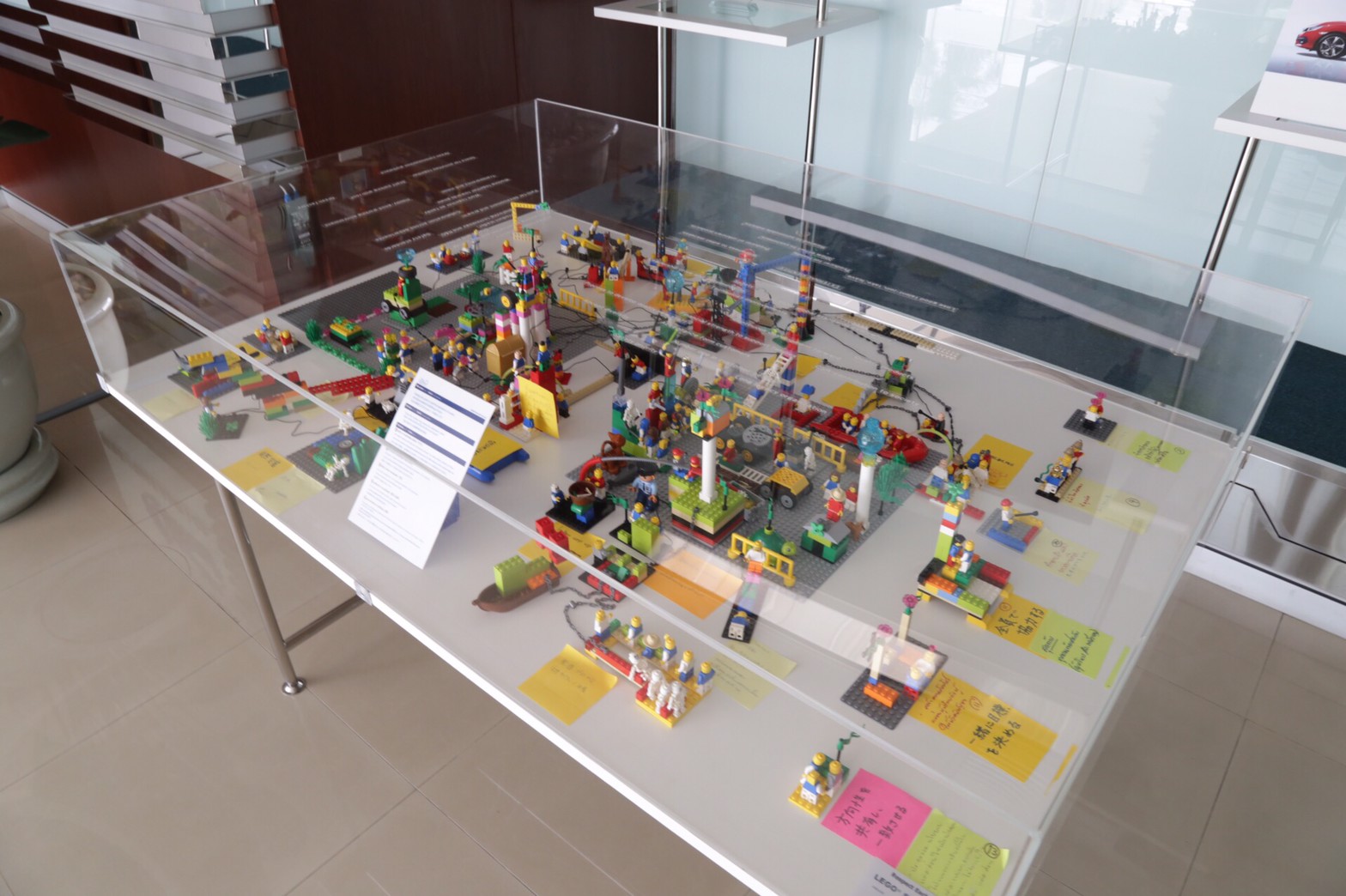

Turning meetings where only a few voices are heard — and nothing gets decided — into true collaborative thinking.
In today’s world of work, organizations face increasing levels of complexity every day —
from market uncertainty and rapid technological change to the diversity of people and perspectives within teams.
What organizations need is not just better communication —
but better thinking together.
That’s where the LEGO® SERIOUS PLAY® Method begins.
It’s a facilitated process designed to help teams engage in collaborative thinking and uncover shared understanding — by building with their hands and listening with their eyes.
The Origin of LEGO® SERIOUS PLAY®
From a child’s toy to a world-renowned tool for organizational development
The story of LEGO® SERIOUS PLAY® began in 1994, at a time when the LEGO® company was still family-owned and led by Kjeld Kirk Kristiansen, the grandson of the founder.
For more than two decades, LEGO® had enjoyed tremendous success with its colorful plastic bricks.
But the world was changing.
New forms of play — especially video games — were entering the market, and children were beginning to play in new and different ways.
The phrase “Growing Older Younger” captured this shift perfectly: children were becoming more mature at a younger age.
For a company whose business was built around imagination and play, this represented a serious challenge — one that demanded a new way of thinking.
LEGO® itself began to feel the tremors of change.
To respond, Kjeld Kirk Kristiansen initiated a process to create a new strategy for the company — yet the results left him deeply disappointed.
Although LEGO® had always been a brand built on imagination, the approaches used in its strategy sessions felt anything but imaginative.
At that same time, two professors from IMD Business School in Lausanne, Switzerland — Johan Roos and Bart Victor— were exploring new ways to make strategy development more engaging and effective.
Kjeld, who had long-standing ties with IMD, reached out to them in 1996, and the three soon discovered they shared the same frustration: traditional strategy methods simply did not inspire people or lead to meaningful change.
They also shared a common belief:
- People are the key to an organization’s success — they hold both the capability and the desire to make it happen.
- Strategy must be something you do, not just something written down in a document.
Kjeld decided to fund their research to explore this challenge further.
A few years later, Professors Roos and Victor began experimenting with LEGO® bricks as a way to express strategic ideas. Their hypothesis was simple yet bold:
If you pour a pile of LEGO® bricks onto a boardroom table and ask executives to build their strategic ideas, their imagination might come alive — just like children at play.
For the first 45 minutes, the experiment was filled with laughter and energy. But soon, they realized something was still missing.
To complete the puzzle, they invited Robert Rasmussen, then Director of Product Development for the Educational Market at LEGO®, to join the project in 1999.
Robert brought with him deep expertise in how humans learn and develop, bridging insights from education, psychology, and design thinking. He led a small, dedicated team to systematically refine and test the process — and within two years, they succeeded in developing what we now know as the LEGO® SERIOUS PLAY® Method.
By 2001, the first version of LEGO® SERIOUS PLAY® was ready — introduced as a thinking, communication, and problem-solving technique for groups.
That moment marked the beginning of what we now know as the LEGO® SERIOUS PLAY® Method — a process born from the intersection of learning and strategic thinking.
Since then, it has evolved into a methodology that transforms ordinary meetings into sessions of lively, shared thinking, helping organizations around the world build understanding, alignment, and innovation — together.
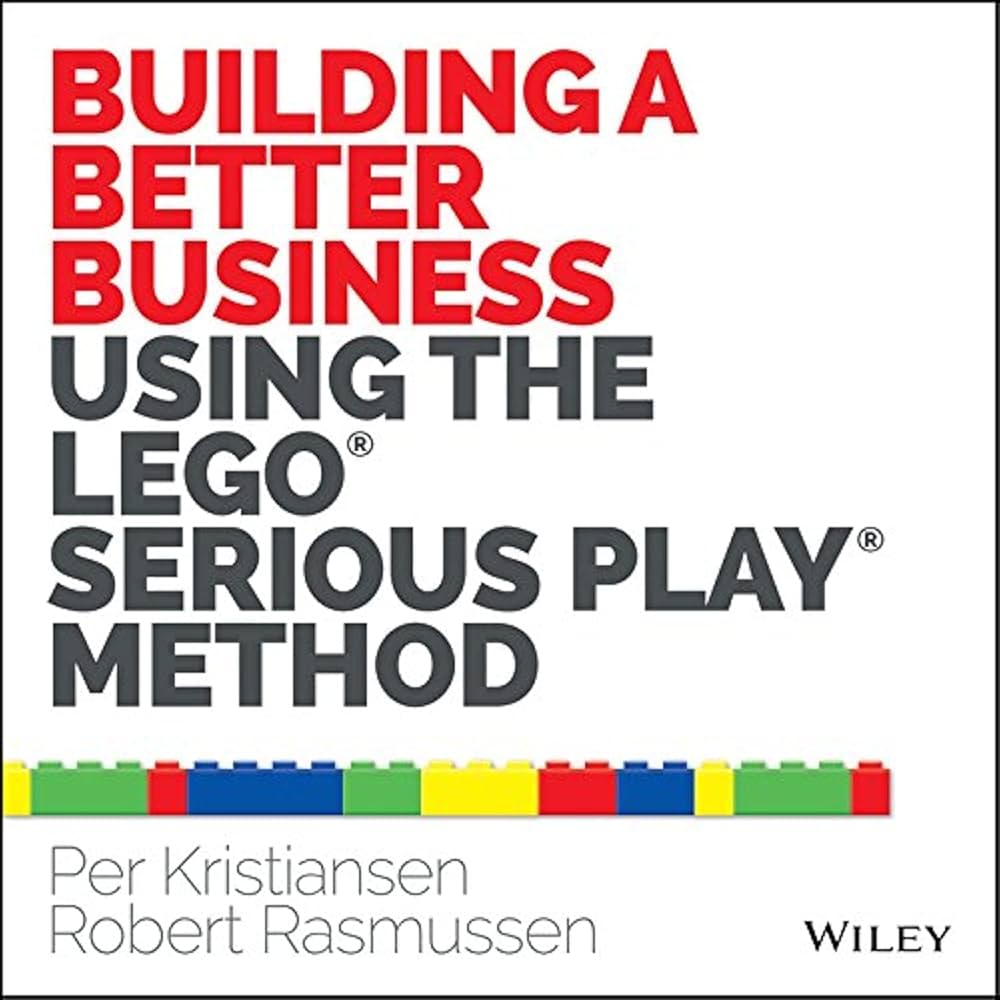
For a deeper exploration of the method’s origins and philosophy, see the book Building a Better Business Using the LEGO® SERIOUS PLAY® Method by Robert Rasmussen and Per Kristiansen — the creators of the method.
(Thai translation: “พัฒนาธุรกิจให้สุดยอด ด้วยพลังสมองขั้นสูง”)
The Purpose of the LEGO® SERIOUS PLAY® Method
The LEGO® SERIOUS PLAY® Method was designed to unlock the full potential of individuals and teams through one simple yet powerful principle:
“Everyone builds, everyone shares, everyone reflects.”
Each participant builds a LEGO® model to express their thoughts, experiences, and beliefs — turning what’s often hidden in the mind into something tangible and visible.
They then share the story behind their model and reflect together as a team, creating a shared understanding of complex issues that words alone often cannot capture.
The result is profound:
- Everyone has the opportunity to contribute their ideas.
- Every voice is heard and respected — without judgment.
- Participation is equal across the room.
- Teams gain a clearer, shared picture of the challenges they face.
- And decisions are made together — with true consensus.
The Process: Four Core Steps
In practice, the LEGO® SERIOUS PLAY® Method follows a clear and structured process consisting of four main steps:
- Questions – Setting the challenge
The LSP® Facilitator designs and presents a clear challenge aligned with the workshop’s objective, helping participants focus their thinking and engage simultaneously throughout the session. - Build – Thinking with your hands
Participants build LEGO® models based on the given challenge — expressing their thoughts, feelings, or experiences related to the topic. - Share – Telling the story using the model
Each participant presents what they have built and shares the story behind their model, allowing others to understand their perspective without assumptions.
Listeners are encouraged to receive the story without judgment or reinterpretation, as the meaning of each model belongs solely to its builder. - Reflect – Connecting and making sense together
he team collectively observes, analyzes, and reflects on what has been shared — identifying insights, patterns, and next steps to create shared understanding and alignment.
This is the heart of the LEGO® SERIOUS PLAY® Method —
it transforms meetings from talking to thinking with your hands and communicating with your eyes.

Contact
Rasmussen Consulting Thailand
Why Does LEGO® SERIOUS PLAY® Work?
The Science Behind the Method
The LEGO® SERIOUS PLAY® Method is grounded in psychology and brain science.
Robert Rasmussen and his team developed the method by drawing upon several well-established learning theories, including:
- Constructivism and Constructionism – inspired by the work of Jean Piaget and Seymour Papert, emphasizing that people learn best when they actively construct knowledge.
- Neuroscience – explaining how “using our hands” activates deeper areas of the brain and connects physical activity with creative and cognitive processes.
- Experiential Learning – learning through experience, reflection, and shared dialogue.
When participants build with their hands, they access knowledge, insights, and experiences that often lie beneath conscious awareness.
And when they share the stories behind their models, the team begins to see — clearly and collectively — what each person thinks, believes, and values.
This marks the first step toward achieving genuine shared understanding, where people move beyond discussion to truly think — and learn — together.
Why facilitation matters in LEGO® SERIOUS PLAY® (The Facilitator)
The LEGO® SERIOUS PLAY® Method is not a training — it’s a facilitation process designed to help groups reach meaningful outcomes together.
In this process, the role of the facilitator is not to teach, but to guide the collective thinking journey.
The facilitator designs the challenges and sequences the activities, creating a safe space where participants can build, share, and reflect — without judgment, right, or wrong.
What truly matters is that every voice in the room is heard and seen equally.
This is what makes LEGO® SERIOUS PLAY® such a powerful method for leaders and teams who want to unlock their true potential and think — together.
Certified LEGO® SERIOUS PLAY® Facilitators complete a four-day training to master the method and ensure psychological safety in every session.
Benefits of LEGO® SERIOUS PLAY® for Organizations
Organizations that apply the LEGO® SERIOUS PLAY® Method seriously often experience tangible transformation, such as:
- Teams communicate more effectively and develop a shared understanding of complex issues.
- Decisions are made faster because everyone is involved from the very beginning.
- Employees feel a stronger sense of engagement and ownership.
- Innovation emerges naturally through the connection of diverse perspectives.
In summary, LEGO® SERIOUS PLAY® doesn’t just create better meeting outcomes —
it helps build a lasting culture of collaborative thinking within the organization.
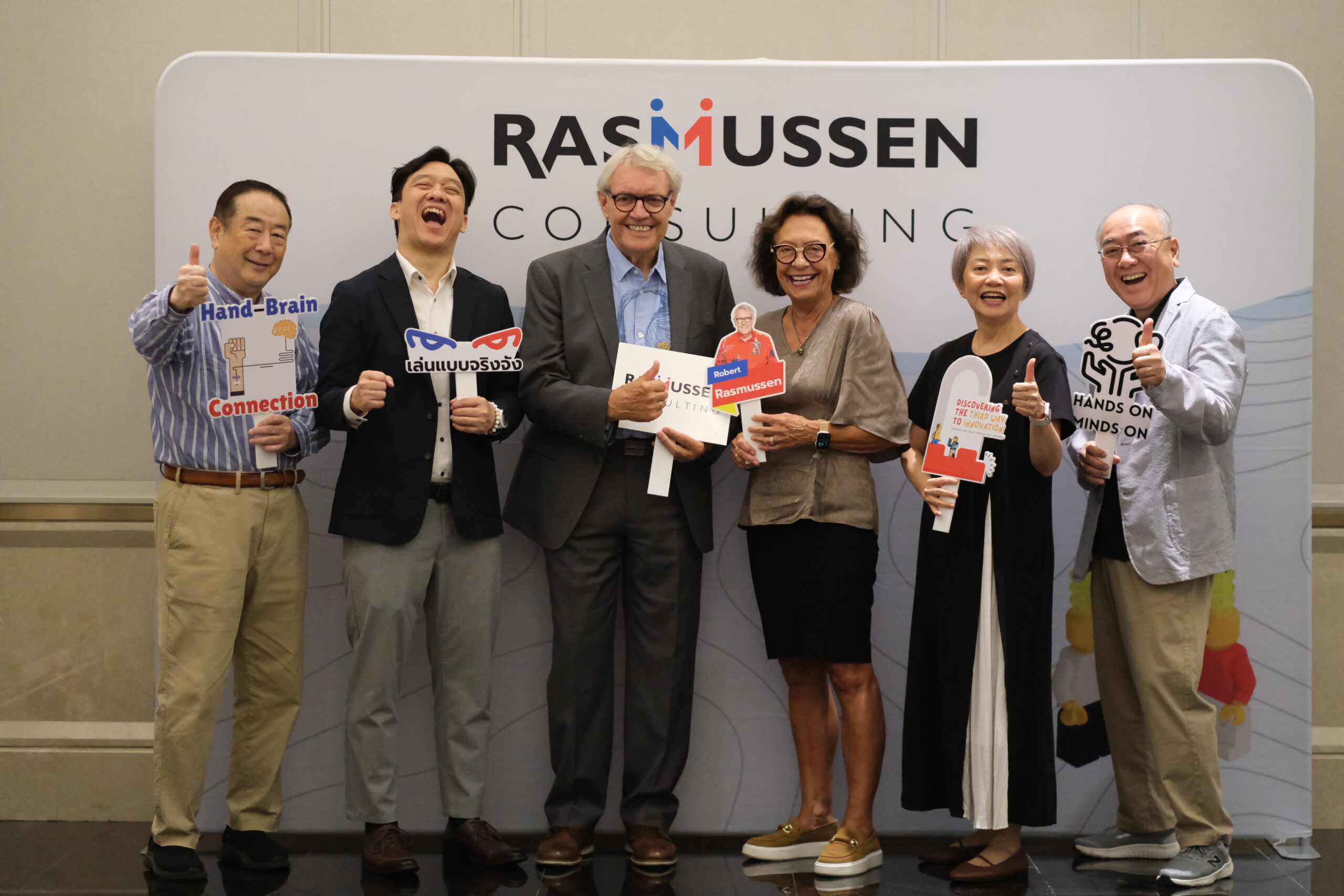
Facilitated by Rasmussen Consulting Thailand
Rasmussen Consulting Thailand is the official representative office of Rasmussen Consulting (Denmark) — founded by Robert Rasmussen, the designer and co-developer of the LEGO® SERIOUS PLAY® Method.
The Thailand office is led by Mr. Joe Surathin Sathitlert, who has direct experience working alongside global experts and pioneers of the method.
We believe that learning has its greatest impact when everyone takes part — and we bring this principle to life in a way that fits the culture of each organization we work with.
Contact us
Rasmussen Consulting Thailand